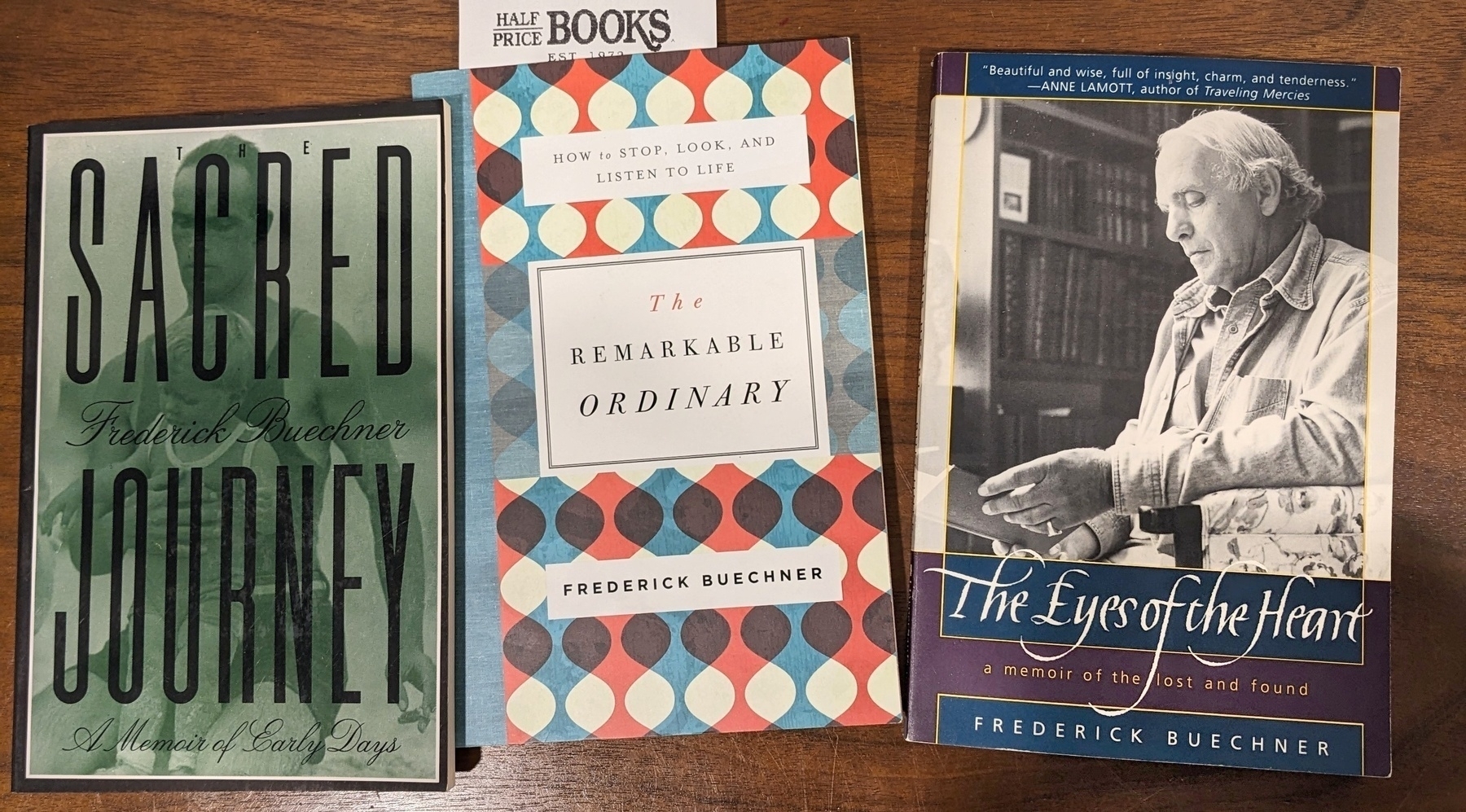
From a trip to Half-Price Books.
Russell Moore (italics mine):
On the other side of the sword that cuts through Mary’s heart at the cross (or those that cut off the martyr’s heads in first-century Rome), there’s a weight of glory that cannot be described adequately with words. We can free ourselves to risk heartbrokenness because a broken heart is the beginning of the story, not the end.
Robert Herrick:
The darling of the world is come,
And, fit it is, we find a room
To welcome Him. The nobler part
Of all the house here, is the heart …
Merry Christmas!
The Gospel tells us: “Blessed are the pure in heart, for they shall see God.” I am not pure in heart but I think I may have encountered such a person. At the least, I have read stories about such a person and I know that such persons see what I cannot and they see in a manner that as yet I do not.
But this goes to the point of salvation. Salvation is not how to get people like me (or like you) into some place safe from the fires of hell. That is a transportation problem at best, or a legal problem, at worst. The point of salvation is how to change people like me (and you). It is about changing us such that seeing the resurrection becomes possible. …
If I could see as I am meant to see then my eyes would not see enemies nor the like. Not that others might not intend to be my enemies or want evil for me – but there are eyes that see beyond all of that and see the Truth of a person. Had I the eyes to see, love would not be an insurmountable problem but as tangible as the Resurrection itself.
H/T @ReaderJohn
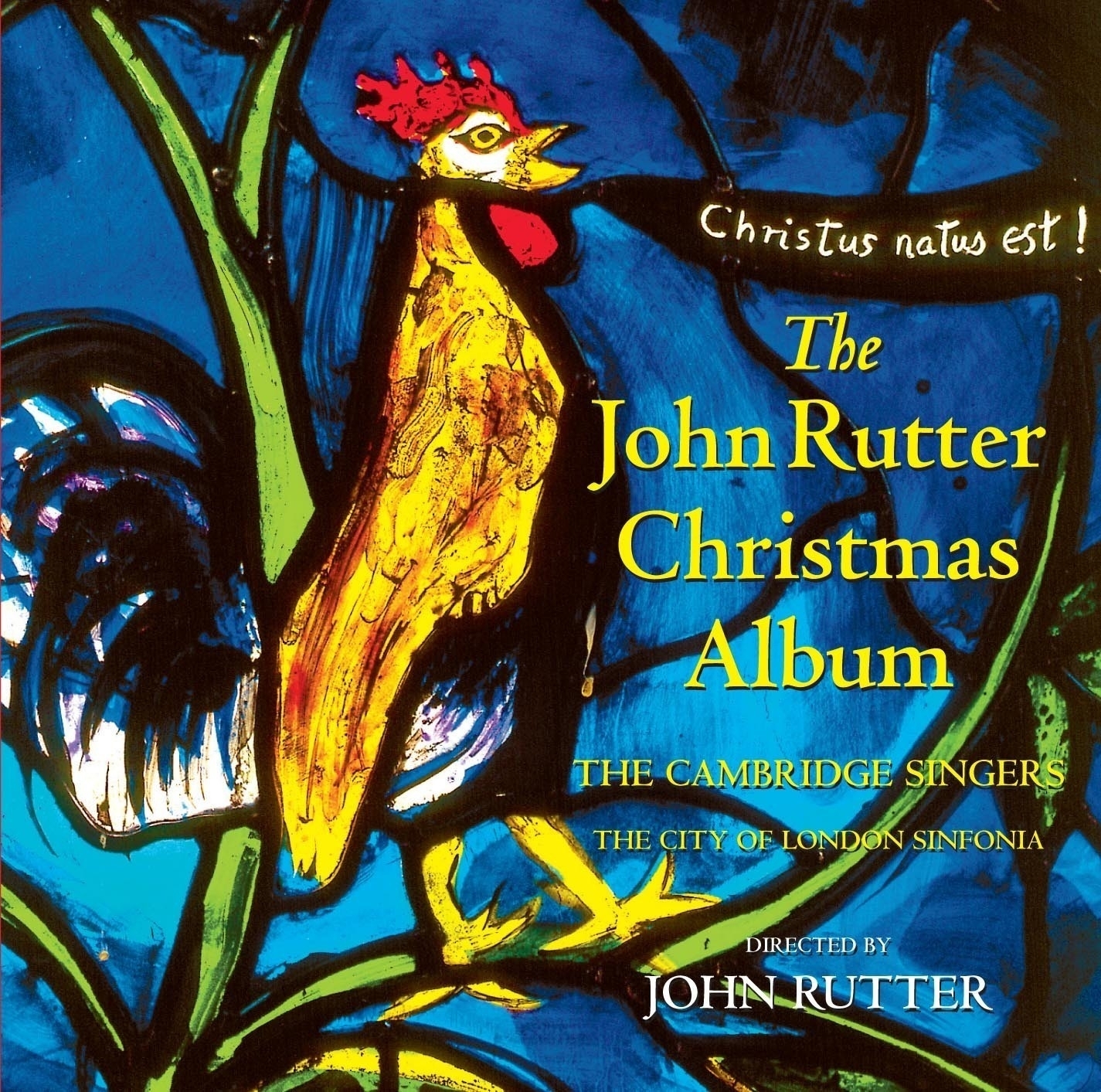
Lovely. As ever. (OK, a couple are overly bouncy. But I’ll gladly put up with them if I can hear “What Sweeter Music.”)
We say, “Merry Christmas and Happy New Year” in one breath, and commonly refer to this time of year as the “Holiday Season”, as if it were all one singular event. There is an interesting irony in lumping the two celebrations together, for although both events celebrate new beginnings, there is a difference as New Year’s places the burden on us to begin anew, and the reason we make New Year’s resolutions. Christmas, on the other hand, places that burden on – of all things – a Babe in a manger whose new beginnings fulfill an ancient promise of restoring mankind’s relationship with God. And while New Year’s resolutions are sure to fail, the Babe in the manger is a sure thing – He who proclaims, “Behold, I make all things new.”
In the tender compassion of our God
the dawn from on high will break upon us
To shine on those who dwell in darkness and in the shadow of death,
and to guide our feet into the way of peace.
As impersonal systems play increasing roles in information-gathering and decision-making, the personal element can be summed up as “human error.” … [T]hen of course the fields concerned with human nature—specifically, all the ways it is not predictable—are unseated, too…
[I]t is simply better to be a human when a personal God is at the heart of the universe. Human lives are easier to defend. Human joys have cosmic significance. Human foibles are “a feature, not a bug.” Human creativity is more arresting. Human language can be savored. Human stories must be told.
Malcolm Guite is posting poems he’s collected in his Advent Anthology, Waiting on the Word. I love to hear Malcolm read (and speak). Today’s offerings, a poem by Robert Hayden, and art by Linda Richardson, are particularly lovely.
An imaginative conservatism should see in Scruton’s centring of beauty in architecture and design a natural affinity with the articulation of craft as a political and economic ideal in the likes of William Morris. There is a politics and an economics of conservatism to be forged, but it requires making of itself more than an aesthetic gloss of Reaganism.
Sebastian Milbank, “Don’t Idolise Roger Scruton”, The Critic, 03.Nov.2024