We live in a world where violating taboos is monetizable and confers enviable status. I like taboos— not all of them, of course. But I respect the role of taboos in society. Good taboos are the guardians of settled questions. They sit like gargoyles at the mouth of dangerous caves and warn against spelunking in dark and dangerous places. …
The riot of taboo-violating and dogma-disinterring is an invitation to consequences few have the courage or the basic knowledge to apprehend.
If … you conjure a world where there is no external truth, only a riot of competing, equally valid perspectives, then you create a Nietzschean world where the only arbiter of “truth” is the one with the will and the power to impose their truth on everyone else.
-
Taboos -
Strange (or Maybe Not So Much) Whatever you may think of Kevin Williamson (and I know
manysome of those I follow on MBloathesometimes have issues with him), this is sizzling:It is strange how excessive admiration for the will to power brings out the servility in so many men.
-
We think we’re so smart. But we’re not. Matthew Butterick on Artificial General Intelligence (AGI), via @ayjay:
Because here’s the thing: to me one of the greatest risks posed by AI is rooted in our failure of imagination: our failure to broadly imagine the possible forms AI (including AGI) could take; our failure to broadly imagine the possible consequences it could wreak.
-
Frederick Buechner, The Sacred Journey It is by its content rather than its duration that a child knows time, by its quality rather than its quantity–happy times and sad times, the time the rabbit bit your finger, the time you had your first taste of bananas and cream, the time you were crying yourself to sleep when somebody came and lay down beside you in the dark for comfort. Childhood’s time is Adam and Eve’s time before they left the garden for good and from that time on divided everything into before and after.
-
Lynda Barry via Adam Westbrook via Robin Sloan 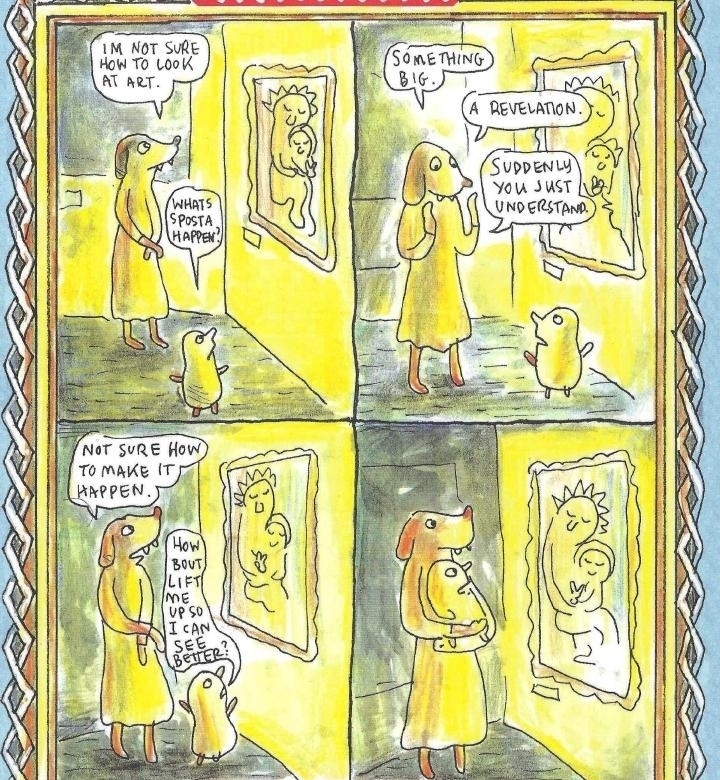
-
Not a Bug Through their ever-flowing stream of messages, each offering a simulation of connection, social platforms promise to alleviate the sense of loneliness they provoke. Turning social interactions into symbolic transactions, they reconstruct society on a foundation of anomie. Bots fit seamlessly into such a society, upping the monetization potential substantially.
When Facebook’s News Feed introduced us to what Zuckerberg termed “frictionless sharing,” we learned, or should have learned, that friction is the essence of sharing. Freed of any investment of effort, time, or care, sharing loses all meaning. It becomes mere transmission. The frictionless friendship offered by chatbots, by removing the need to adapt one’s self to another self, to make room in one’s life for a different being, will be similarly empty.
-
American Ideals Danielle Allen contra Curtis Yarvin:
He gets his first principles wrong, so we have to return to ours. Most important, human equality precedes human differences. We can identify differences among us only because we are all human, and in that regard equal. As humans we share a capacity for moral judgment and an innate striving to choose actions that make tomorrow better. This is how our drive and capacity for freedom show themselves.
The proposition that all humans are created equal has never meant that we are all the same. Our equality lies in these features of humanity that make us moral beings. Nor does human difference yield fixed and permanent groupings or determine where and how human talent in its immense variety will show itself. The government that will best help humans flourish will start by protecting human freedom. This requires maximal space for self-government, and also government of the whole people that is by and for the people. Not in the interest of those who govern, but in the interest of the governed.
* * *
If our constitutional democracy is weak today—failing to help us meet our governing challenges—that may be because we have lapsed in civic participation. We have ceased to claim our own equality through our institutions, which offer it. We have allowed political parties to capture our institutions, and to govern for their own sake rather than the public good. We need to renovate our democratic institutions, starting with party reform.
But our more basic work may need to be on ourselves. Here Mr. Yarvin’s words are a warning: “Americans of the present are nihilistic and narcissistic,” he writes. “They are frivolous about the present and ignorant of the past. While these qualities may not make the Americans of today suitable for an 18th-century democracy, they may be just the right qualities for a 21st-century regime change.”
We don’t need his regime change. We need democracy renovation and renewed seriousness about our lives as citizens. This means reconnecting to our civic power, experience and responsibility. This requires civic practice and education. It also means redesigning institutions so they reward participation and deliver effective governance. We need to understand why and how separation of powers, checks and balances, due process, and a national legislature that functions are necessary to protect human freedom.
-
These Days, “Conservatives” Aren’t.
Jonah Goldberg:The market system is man-made, just as gardens are. But it is not the product of any individual will. It is a crowdsourced network of institutions, constructed over generations of trial and error, learned best practices, and the accumulation of common law and legislation alike. …
It is only when someone tears down or batters these Chestertonian fences all around us that we discover those fences are there for a reason. … That’s where we are now. One man is singlehandedly taking a plow to the garden because he is confident that he knows better than, almost literally, everyone. And his defenders have few, if any, serious arguments in his defense beyond “trust him.”
-
Fascism and the Rule of Law Can Run on Parallel Tracks As Fraenkel explained it, a lawless dictatorship does not arise simply by snuffing out the ordinary legal system of rules, procedures, and precedents. To the contrary, that system—which he called the “normative state”—remains in place while dictatorial power spreads across society. What happens, Fraenkel explained, is insidious. Rather than completely eliminating the normative state, the Nazi regime slowly created a parallel zone in which “unlimited arbitrariness and violence unchecked by any legal guarantees” reigned freely.
. . .The trick was to find a way to keep the law going for Christian Germans who supported or at least tolerated the Nazis, while ruthlessly executing the führer’s directives against the state’s enemies, real and perceived. Capitalism could jog nicely alongside the brutal suppression of democracy, and even genocide.
-
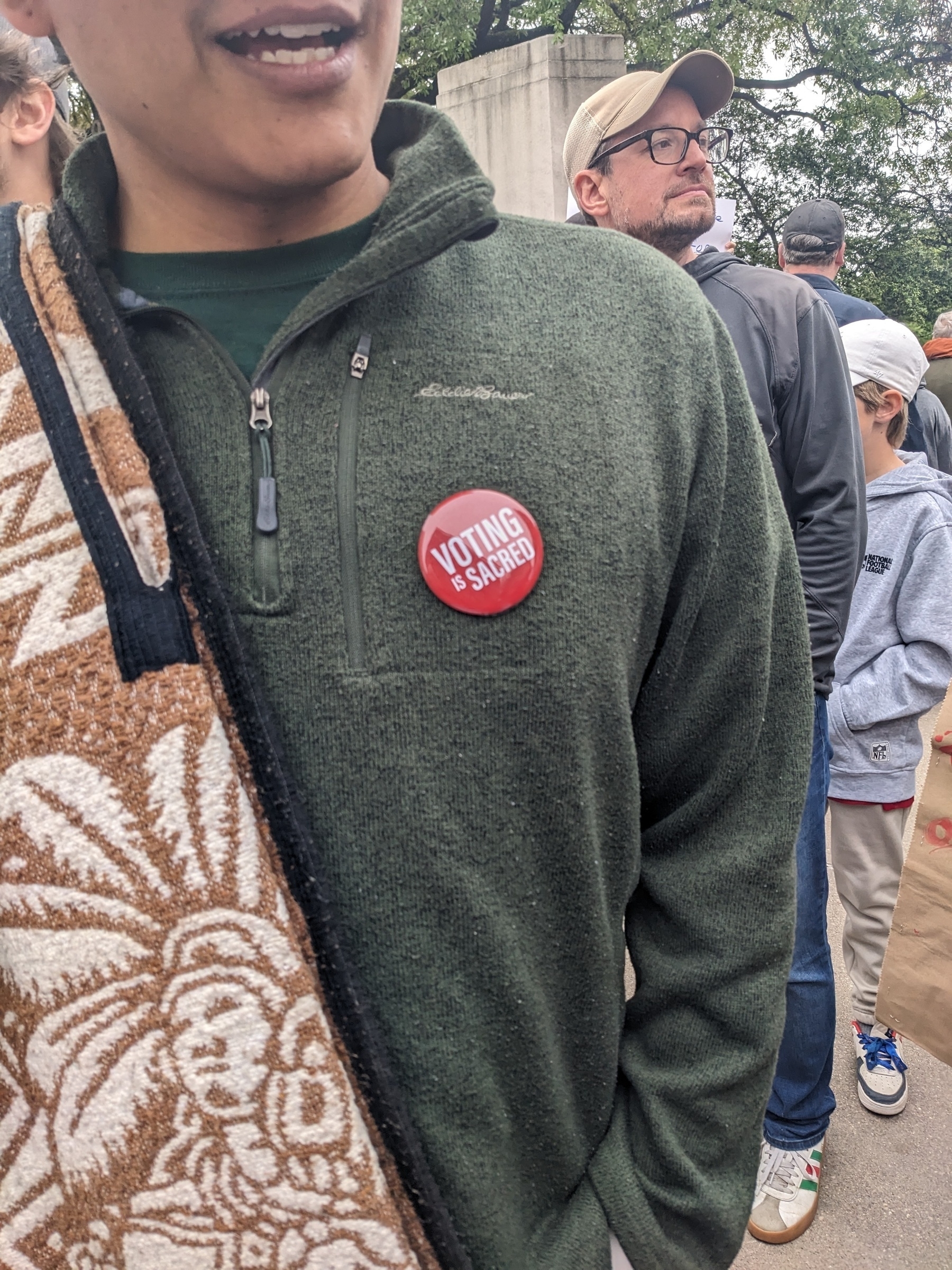
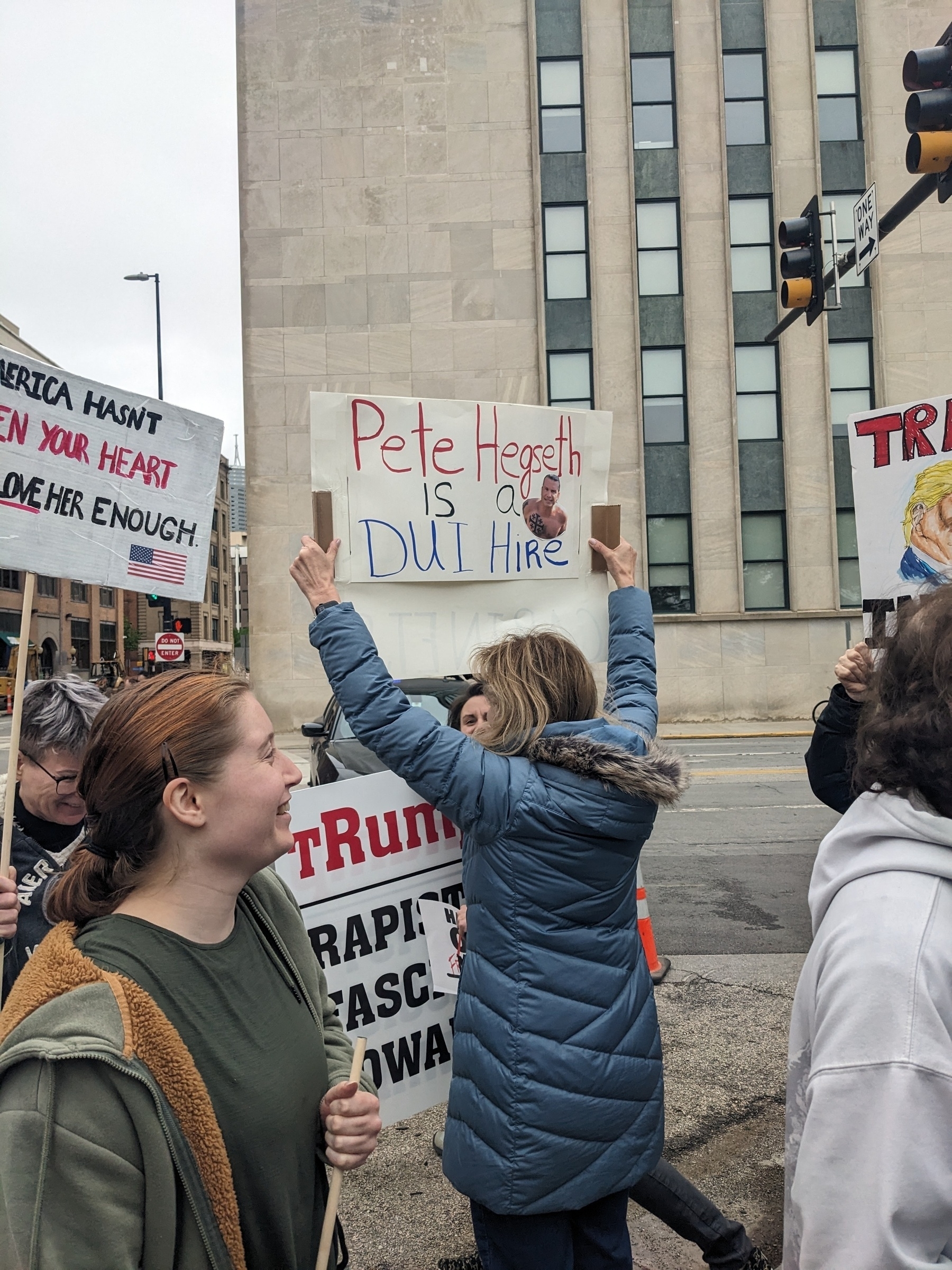
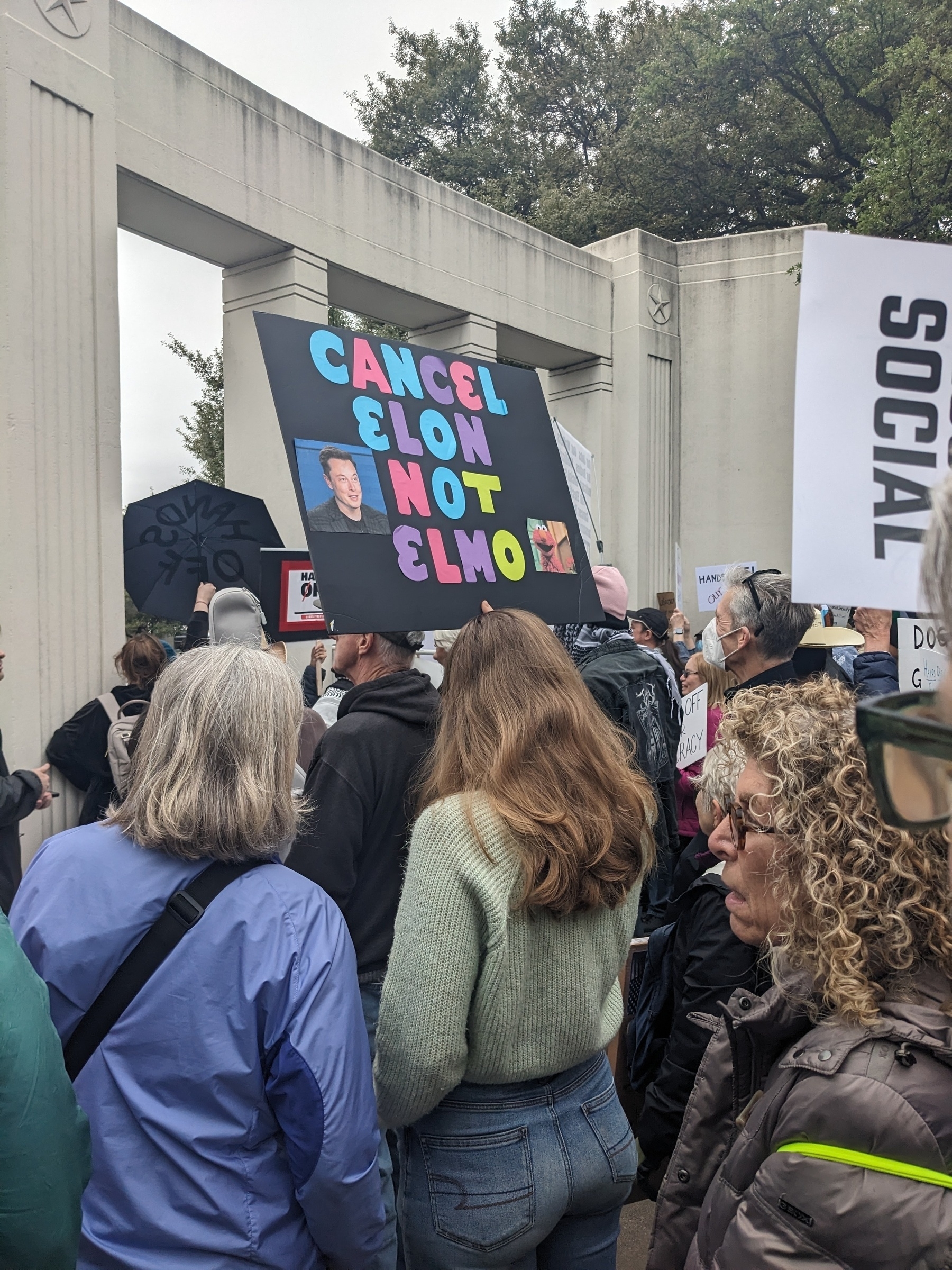
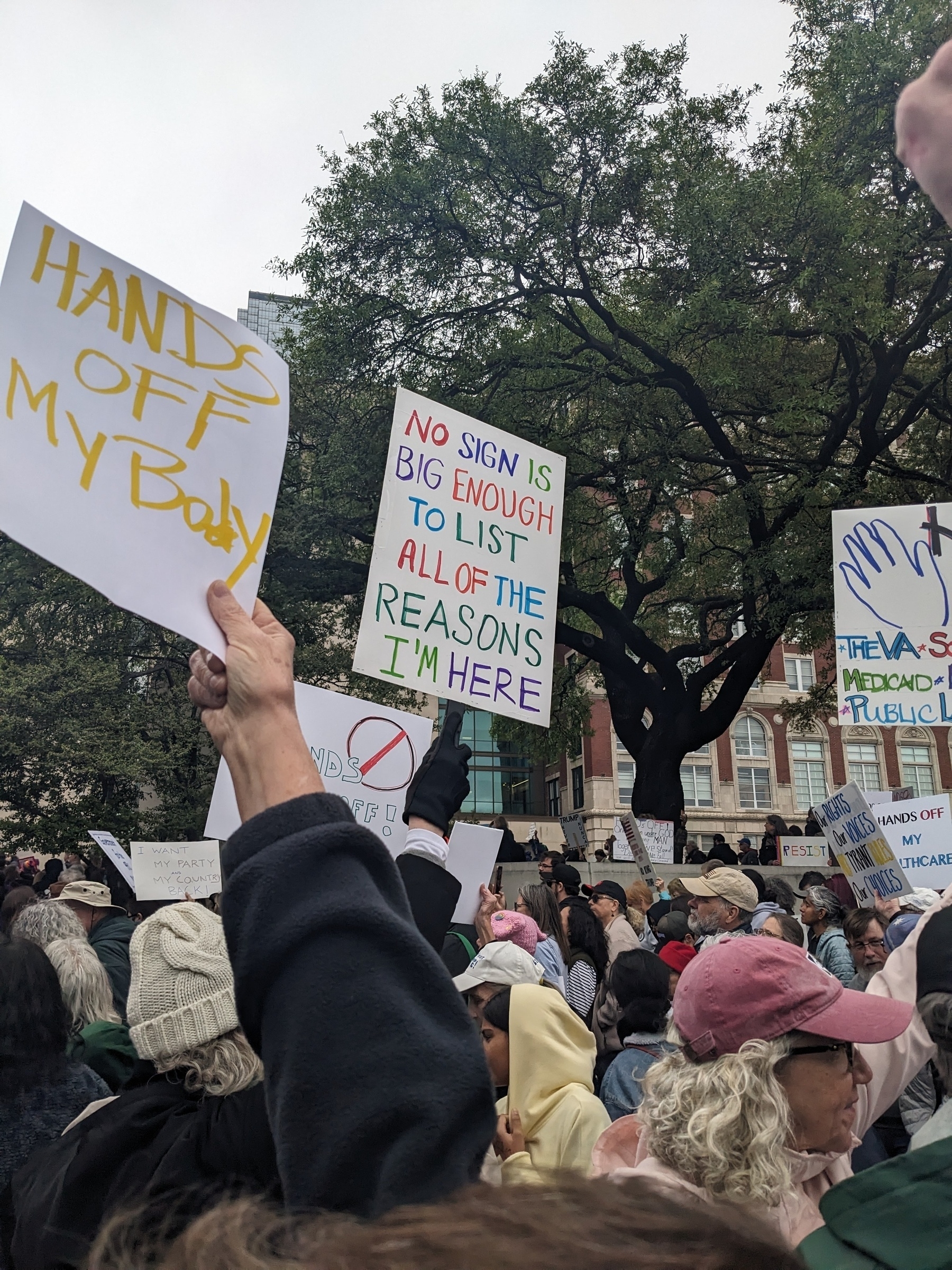
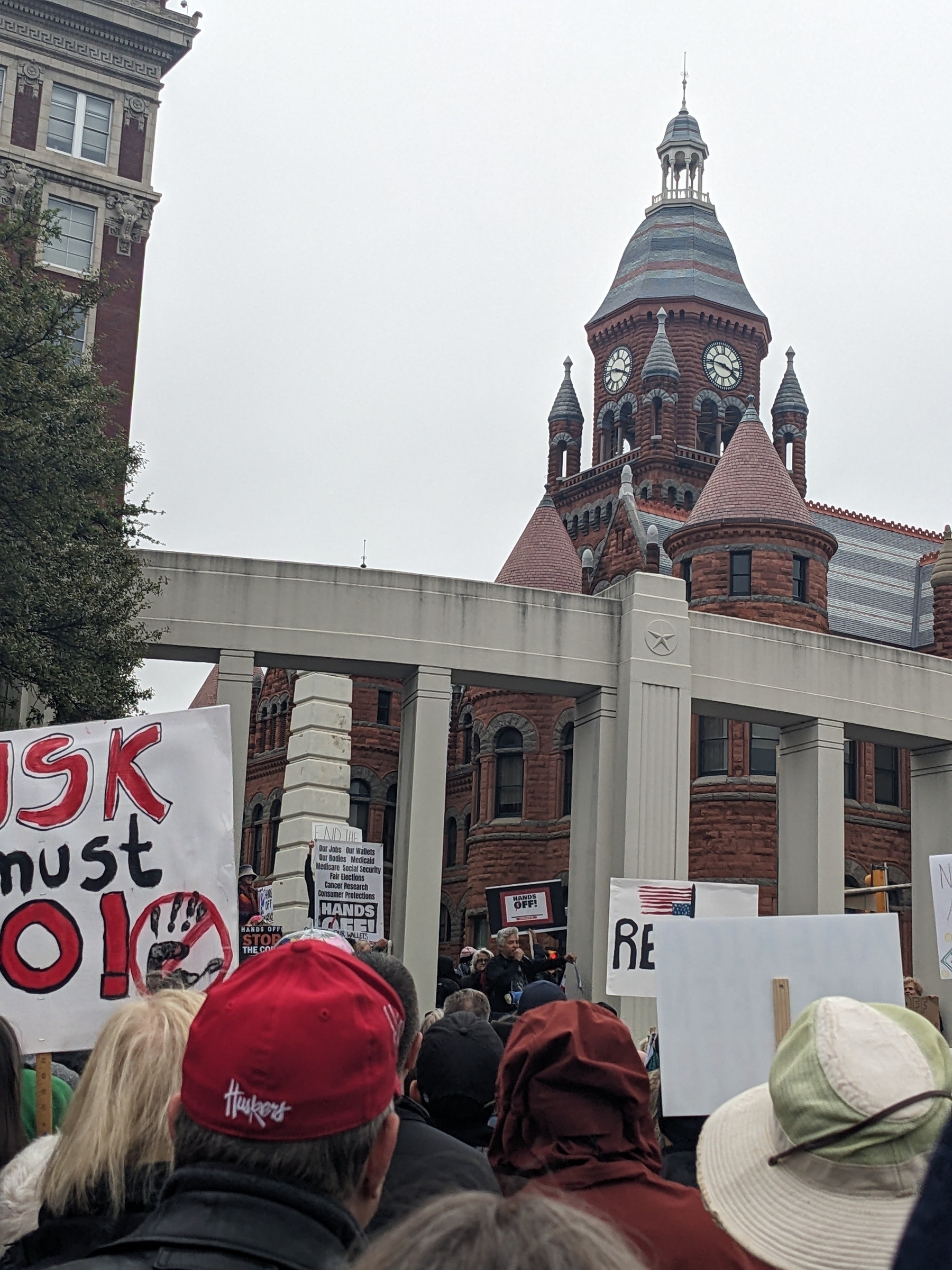
Anti-Trump Rally, Dallas - #HandsOff I made a sign that said, “Uphold the Rule of Law.”