Fragment of a human face aged over one million years discovered
No sé.
Six years after my dad died, three after my mom died, and this year, when my first two grandchildren are born, this resonates. Frederick Buechner, The Eyes of the Heart.
Each time members of the tribe die, the self we were with them dies too, which is to say that the kind of words we spoke only to them, were only to them, and the kind they spoke only to us are spoken no longer. But if outwardly our language is thus impoverished, inwardly it is enriched because when members of the tribe die, the words they were are added to the vocabulary of the heart, where we have more than just ears for hearing them. And each time a member of the tribe is born, a new word comes into being, and nothing is ever the same again.
Tomatoes started from seed in the garage in January (under lights) went into the beds today. Fertilized, planted, staked, mulched, and watered. Twenty-one plants, six varieties. The game’s afoot, Watson!

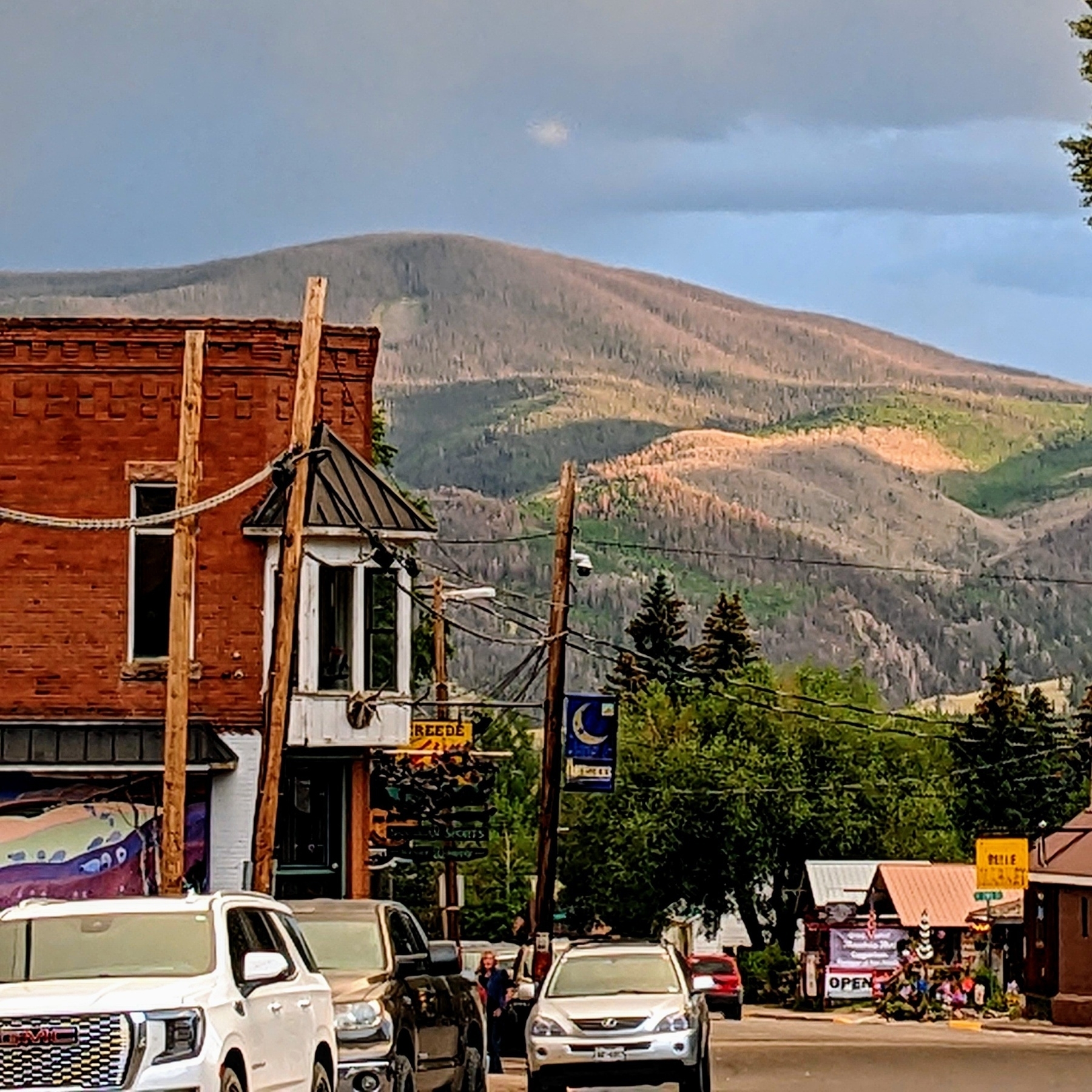
Study - Hill Country in Summer
Frederick Buechner remembers the summer of 1948 from his The Eyes of the Heart: a Memoir of the Lost and Found:
… he used to give far and away the most enchanted cocktail parties I had ever attended or have ever attended since, where he served endless martinis in frosted silver glasses and where, in the spring, petals from a flowering plum sometimes drifted in through his mullioned windows to lie on the floor like snow. Colleagues from the English department like R. P. Blackmur, Donald Stauffer, and John Berryman came from time to time, together with occasional undergraduates like myself, and there were also friends he had made in the town of Princeton including a handful of beautiful young women, one of whom I fell fathomlessly in love with and on the starlit summer night of my twenty-first birthday on the balcony of the St. Regis roof in New York proposed matrimony to because such was the world in those now almost unimaginable days there seemed no other thinkable way to consummate our relationship. She wore her hair in two short pigtails, wore ballet slippers on her feet, could squirt through a gap in her teeth with remarkable accuracy, and at the same time had the good sense to turn me down. How things would have turned out for both of us if she had decided otherwise I shudder to imagine, but if we had had children they would now be past fifty, and that is shuddersome enough.
I planted 200 of these suckers last November, and am so glad to see them coming up. God grew ’em, not me. But I did participate in the project.
WTF? Although non-citizens don’t enjoy full free-speech protections, they are entitled to due process.
A spokesperson for the Department of Homeland Security, Tricia McLaughlin, confirmed Khalil’s arrest in a statement Sunday, describing it as being “in support of President Trump’s executive orders prohibiting anti-Semitism.”
Khalil’s arrest is the first publicly known deportation effort under Trump’s promised crackdown on students who joined protests against the war in Gaza that swept college campuses last spring. The administration has claimed participants forfeited their rights to remain in the country by supporting Hamas. Time.com
Not letting his wife (an American) or lawyer know where he is being held is especially chilling.
“Anora” – a movie about a sex worker and her client – won a bunch of Oscars this year. I haven’t seen it, so I can’t comment on the movie. But it struck me that both the lead actress and the writer/director made a point to express solidarity with sex workers. What might they have been trying to convey? And what did they convey without trying? As with almost all human endeavors, I suspect there were a bunch of motivations, some of which contradict each other.
First, they seem to have been holding up the truth that prostitutes are, indeed, real human beings, not types, and therefore are worthy of respect as humans. Excellent. Count me in.
They may also have been endorsing the idea that prostitution should be freed from old, outworn stigmas that a repressive society traditionally associates with the oldest profession. Maybe they think women and men should be free to provide sex (safely) in exchange for money, especially if the money translates to power that’s traditionally inaccessible to sex workers. This notion views sex as a good or service tradeable for money (aka power), the same as any other commodity.
Here, we part ways, because this misunderstands the right purpose of sex. My understanding that there even is a right purpose of sex necessarily arises from the notion that God, as the giver of the gift that is sex, attaches an intent to it. I hold that God’s intent for sex is to nurture intimacy between the lovers. Undoubtedly, God has additional intentions, such as the gift of children; but here I’m concerned with intimacy. Also, I quite understand that sex certainly can be used as a means to an end, and that’s a very old story (see, e.g., Lysistrata). But that’s not OK in my book. Also, it can be just plain fun. But, it’s meant to be fun that’s shared, ideally with someone you care about.
It’s no accident that at its best, sex is something we do naked. Nakedness is a stripping away of pretense as a way to truly see and be seen by the one you love. Opening our bodies to each other is emphatically not intended as a tool to wield power or extract payment. Using sex for those purposes instrumentalizes sex and commodifies one’s self and one’s partner. It’s the antithesis of nurtured intimacy. (For the same reasons, I don’t like “using” as a verb in this context.)
The “Sex-as-ATM” idea is a manifestation of what Alan Jacobs (@ayjay) calls “Metaphysical Capitalism,” which treats all creation and the entire human condition as elements of a vast market. (See, the discussion of Kant’s view of sex and marriage in this post.)
What’s particularly poignant about viewing sex in this way is that it subverts the humane and tender motivation to understand prostitutes as human beings deserving of respect. I don’t know that many in the “pro-sex-worker” cohort see it, but the idea that our bodies and our intimacies are tradeable commodities is truly, sadly, deeply inhuman.
Faith is not the absence of uncertainty. I’m a person of Christian faith, but I admit I’m not certain of anything – God’s existence, Jesus’ resurrection, the presence of the Holy Ghost. Yet, I have [uncertain] faith in all these things. That faith – together with the evidence of my own experience and, more importantly, what I’ve seen in other faithful people – means my uncertainty doesn’t cause anxiety. *
When Hebrews says, “Now faith is the assurance of things hoped for, the conviction of things not seen,” the author may seem to speak of certainties; “assurance,” “conviction” – those are certainty words. But, there’s also uncertainty in “things hoped for” and in “things not seen.” I feel that tension. And yet, even in the face of uncertainty, I’m not anxious about these things. Perhaps, that’s a gift that Hebrews speaks of as “assurance” and “conviction.”
*I reckon that like St. Paul (in the KJV), I am persuaded of the truth of the Gospel. “For I am persuaded, that neither death, nor life, nor angels, nor principalities, nor powers, nor things present, nor things to come, nor height, nor depth, nor any other creature, shall be able to separate us from the love of God, which is in Christ Jesus our Lord."