We say, “Merry Christmas and Happy New Year” in one breath, and commonly refer to this time of year as the “Holiday Season”, as if it were all one singular event. There is an interesting irony in lumping the two celebrations together …
faith
In the tender compassion of our God
the dawn from on high will break upon us
To shine on those who dwell in darkness and in the shadow of death,
and to guide our feet into the way of peace.
As impersonal systems play increasing roles in information-gathering and decision-making, the personal element can be summed up as “human error.” … [T]hen of course the fields concerned with human nature—specifically, all the ways it is not predictable—are unseated, too…
[I]t is simply better to be a human when a personal God is at the heart of the universe. Human lives are easier to defend. Human joys have cosmic significance. Human foibles are “a feature, not a bug.” Human creativity is more arresting. Human language can be savored. Human stories must be told.
Malcolm Guite is posting poems he’s collected in his Advent Anthology, Waiting on the Word. I love to hear Malcolm read (and speak). Today’s offerings, a poem by Robert Hayden, and art by Linda Richardson, are particularly lovely.
An imaginative conservatism should see in Scruton’s centring of beauty in architecture and design a natural affinity with the articulation of craft as a political and economic ideal in the likes of William Morris. There is a politics and an economics of conservatism to be forged, but it requires making of itself more than an aesthetic gloss of Reaganism.
Sebastian Milbank, “Don’t Idolise Roger Scruton”, The Critic, 03.Nov.2024
From my friend, Dan Wilson:
… whatever the outcome… “well, we will live right on.” We will all go about doing what we do, get the kids off to school, go to work, do the laundry, and go about our lives. And that is as it should be because the greatest impact on our world does not come out of Washington anyway. It never has. Ultimately, it comes from each of us and how we live out our ordinary lives, our good deeds, humility, loving our neighbor, and loving God.
Luke, Chapter 15. Lost sheep, lost coin, lost boy. All wonderful. But the best is at the top in v.2: “… the scribes murmured, saying, ‘This man receives sinners and eats with them.’” Good news, huh?
Two years
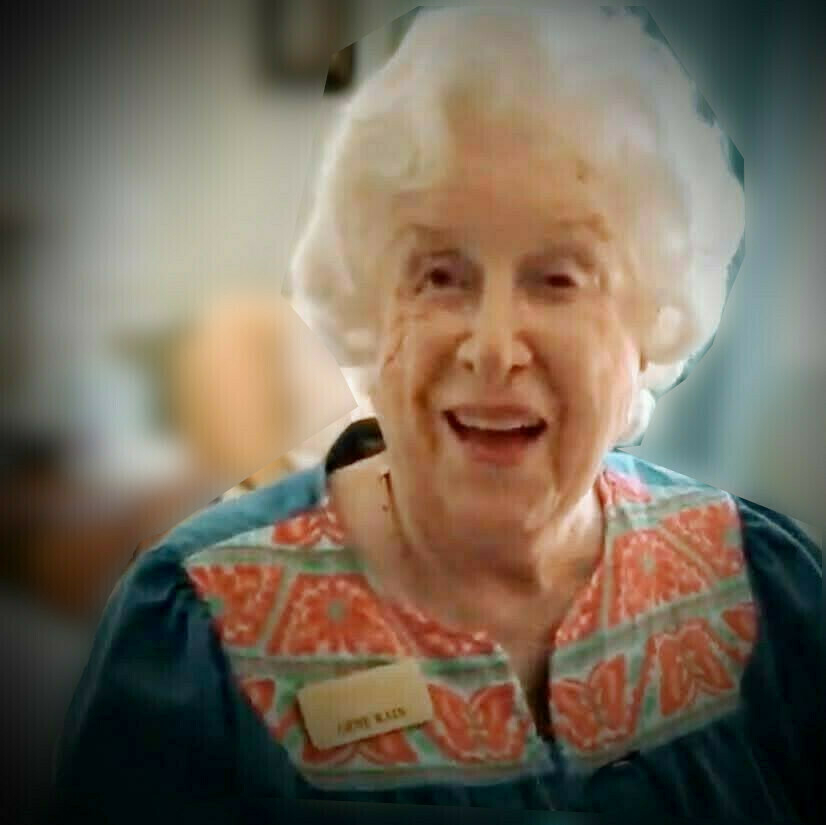
My mom died September 1, 2022: 4 months and 4 days shy of her 99th birthday.I think of her and Dad all the time. The best is when they're in my dreams.
Preach, Jaroslav
>Tradition is a good thing. It is traditionalism that is bad. Tradition is the living faith of the dead; traditionalism is the dead faith of the living. Tradition lives in conversation with the past, while remembering where we are and when we are and that it is we who have to decide.
>
>—Jaroslav Pelikan
(h/t blog.angloromanticism.org - btw, my new band name)
When I first sat with Wendell [Berry] to talk about educating farmers as farmers, he started by turning to the idea of love—in the fullness of the term, not sentimentalized but fully rounded, with the joyful and the difficult joined through membership in a place and with its people.
He then asked a question that I try to answer every day: what works does this love propose?
Start with love, then see what works that love proposes. (H/T: @ayjay)